

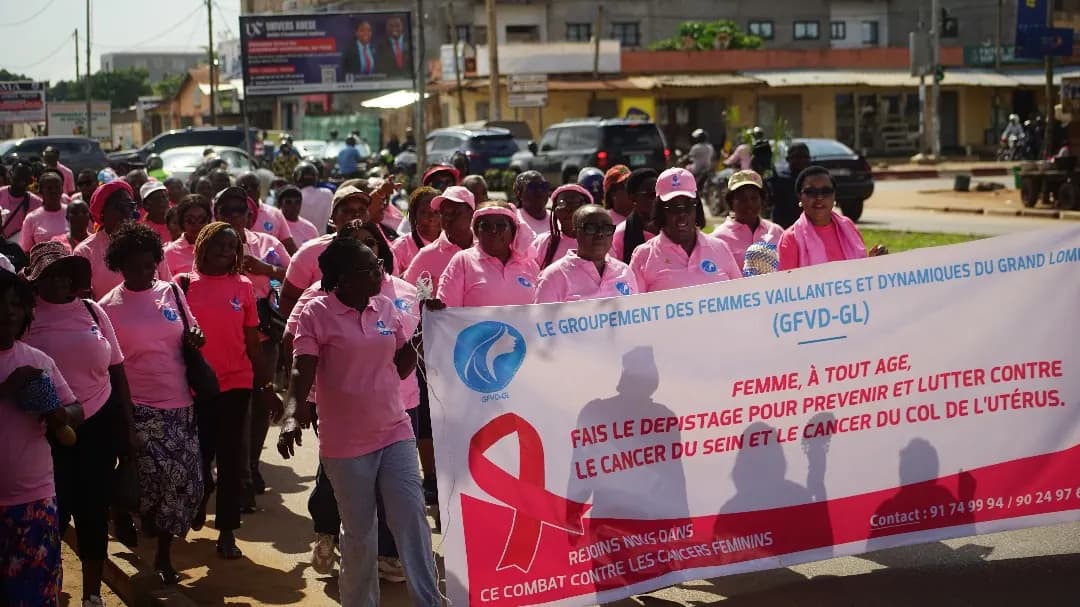
Learn
Breast cancer
It is the most common cancer in women worldwide. The good news: when it is detected early, it is much easier to treat. Here is what you need to know.
What is breast cancer?
Breast cancer develops when cells in the breast grow abnormally and out of control. They usually form a tumour, which generally starts in the ducts that carry milk or in the glands that produce it.
At first, the cancer stays in the breast and often causes no symptoms. Without treatment, it can spread to the lymph nodes in the armpit and then to other organs. That is why early detection changes everything: a cancer found at an early stage is easier to treat, with better chances of recovery.
Warning signs
Early breast cancer is often painless. See a health professional if you notice any of these changes, in one or both breasts:
A lump or thickening
A mass in or near the breast, often painless, that you did not feel before.
A change in size or shape
A breast that changes in size, outline or shape for no obvious reason.
Dimpled or puckered skin
A dip, a crease or a pulling-in of the breast skin, especially visible when you raise your arms.
“Orange peel” skin
Thickened skin with enlarged pores that looks like the peel of an orange.
Redness or warmth
Persistent redness, swelling or warmth on part of the breast.
A nipple that turns inwards
A nipple that pulls in or changes direction when it did not before.
Nipple discharge
Unusual fluid that comes out on its own, especially if it is bloody or from one breast only (outside breastfeeding).
Changes to the nipple or areola
Crusting, scaling, a sore or persistent itching around the nipple.
A lump or swelling under the arm
A swollen lymph node or a mass in the armpit or near the collarbone.
Pain that does not go away
Pain is rarely the first sign, but localised pain that lasts beyond one menstrual cycle should be checked.
Most of these changes are not caused by cancer: cysts, infections or changes linked to the menstrual cycle are far more common. But only an examination can tell.
Do not stay alone with a doubt: see someone within the following weeks, without waiting for it to hurt.
Who is affected?
Any woman can be affected. Some factors increase the risk: age, family history, certain inherited genetic mutations, but also alcohol, excess weight, lack of physical activity or tobacco. Others, such as breastfeeding and physical activity, help to reduce it.
Understand the risk factorsWhat about men?
Breast cancer in men is rare, but it does exist. It most often shows up as a painless lump under the nipple, a nipple that turns inwards or discharge. Men, see a doctor if you notice such a change — and encourage the women around you to get screened.
Early detection: the three pillars
The earlier breast cancer is found, the simpler it is to treat. The World Health Organization promotes early diagnosis: recognising the signs, seeking care promptly and being treated without delay.
Know your breasts
All women, at any age
Knowing what your breasts usually look and feel like helps you notice a change. A monthly self-exam is a good way to do this, but it does not replace an examination by a professional.
The self-exam guideClinical breast examination
During a consultation, or as soon as a change appears
A trained doctor, midwife or nurse looks at and feels your breasts and armpits. This quick, simple examination is at the heart of Pink October screening campaigns.
Where to get examinedMammography and ultrasound
Depending on age and on medical advice
A mammogram is an X-ray of the breasts. Where an organised screening programme exists, the WHO recommends a mammogram every two years for women aged 50 to 69. For a younger woman, or when something abnormal is found, the doctor may order an ultrasound or a diagnostic mammogram.
These tests are not available everywhere in Togo: ask your health professional or our helpline for advice.
Access to mammography and further tests varies between regions. If a test has been prescribed for you, our team can help you find where to have it done.
Diagnosis and treatment
If an examination reveals something abnormal, the doctor may order further imaging and then a biopsy: a small tissue sample analysed in a laboratory. This is the only way to confirm or rule out cancer, and to know its characteristics.
Treatment is tailored to each person, according to the type of cancer and its stage. It often combines several approaches.
Surgery
To remove the tumour, and sometimes part or all of the breast as well as lymph nodes.
Radiotherapy
Radiation directed at the affected area to destroy any remaining cancer cells.
Medicines
Chemotherapy, hormone therapy or targeted therapies, depending on the characteristics of the tumour.
Completing your treatment is essential. Do not hesitate to ask the care team all your questions, and to bring someone close to you for support.
Myths: separating fact from fiction
False beliefs often delay seeing a doctor. Here is what the science says.
- MythFalse
“Breast cancer only affects older women.”
What you should know
The risk increases with age, but young women can be affected too. At any age, a change in the breast deserves a consultation.
- MythFalse
“Men cannot get breast cancer.”
What you should know
Men also have breast tissue. About 0.5 to 1% of breast cancers occur in men. A lump under the nipple should be examined.
- MythFalse
“If no one in my family has had cancer, I am not at risk.”
What you should know
About half of all breast cancers occur in women with no specific risk factor other than sex and age. All women are concerned.
- MythFalse
“A lump in the breast is always cancer.”
What you should know
Most lumps are benign (cysts, fibroadenomas…). But they should always be examined, because only a professional can tell the difference.
- MythNo evidence
“Deodorants and antiperspirants cause breast cancer.”
What you should know
Studies to date have not established a link between using deodorants or antiperspirants and breast cancer.
- MythNo evidence
“Wearing a bra, especially an underwired one, causes cancer.”
What you should know
No scientific evidence links wearing a bra to breast cancer. Simply choose one you feel comfortable in.
- MythFalse
“If it doesn’t hurt, it isn’t serious.”
What you should know
In its early stages, breast cancer is often painless. Waiting for pain means risking seeing a doctor too late.
- MythFalse
“Having a biopsy makes cancer spread.”
What you should know
A biopsy is an essential test to make the diagnosis and choose the right treatment. Refusing or postponing it wastes precious time.
- MythFalse
“Breast cancer is a death sentence.”
What you should know
When found early and properly treated, breast cancer is cured in a large majority of cases. That is the whole point of early detection.
Noticed a change? Don’t wait.
Our helpline can help you find where to get examined near you.
Learn more
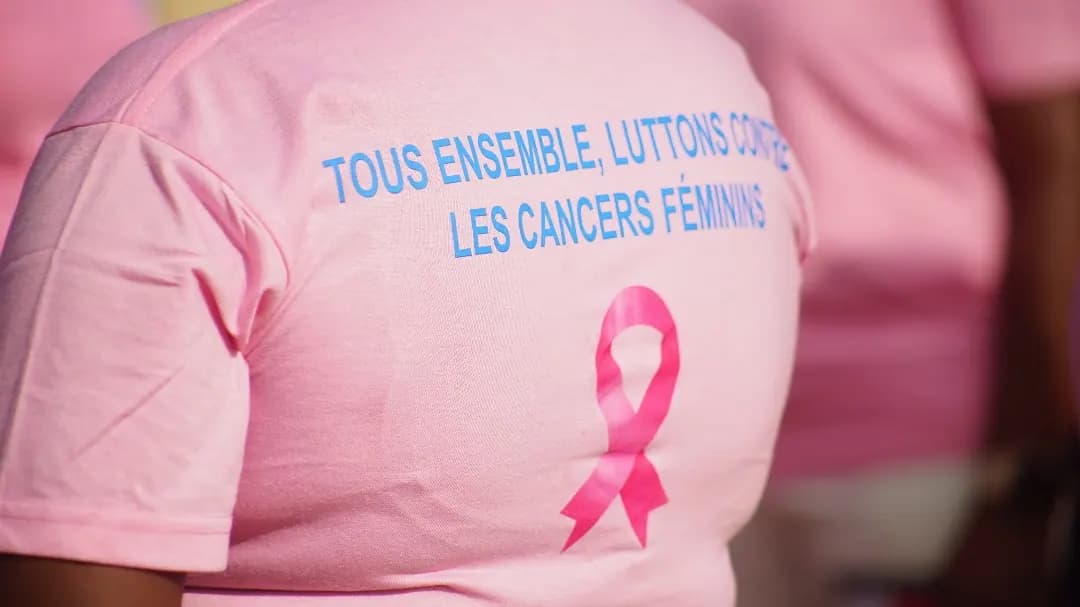
Practical guide
Breast self-exam, step by step
An illustrated six-step guide, a printable checklist and a monthly reminder for your phone.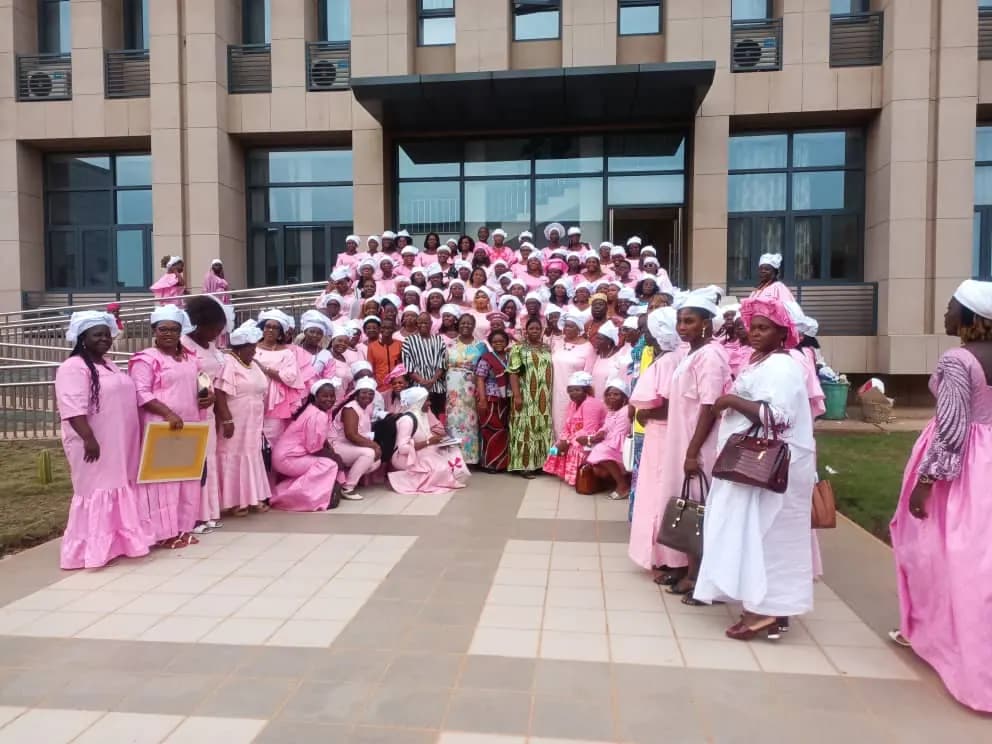
Cervical cancer
HPV, vaccination and screening
A cancer that can almost always be prevented through vaccination and screening.
Sources
The information on this page is based on publications by the World Health Organization (WHO) and the International Agency for Research on Cancer (IARC).
- World Health Organization — Breast cancer, fact sheet (new tab) — OMS / WHO
- World Health Organization — Global Breast Cancer Initiative (GBCI) (new tab) — OMS / WHO
- World Health Organization — WHO position paper on mammography screening (2014) (new tab) — OMS / WHO
- International Agency for Research on Cancer — Global Cancer Observatory, GLOBOCAN 2022 (new tab) — CIRC / IARC
- National Cancer Institute — Antiperspirants/Deodorants and Breast Cancer (new tab) — NCI (États-Unis / USA)
For information only
This information does not replace a medical consultation. It cannot be used to make a diagnosis or to choose a treatment. For any question about your health, or if you notice a change, see a doctor, a midwife or a health centre.
Content reviewed on 3 October 2026