
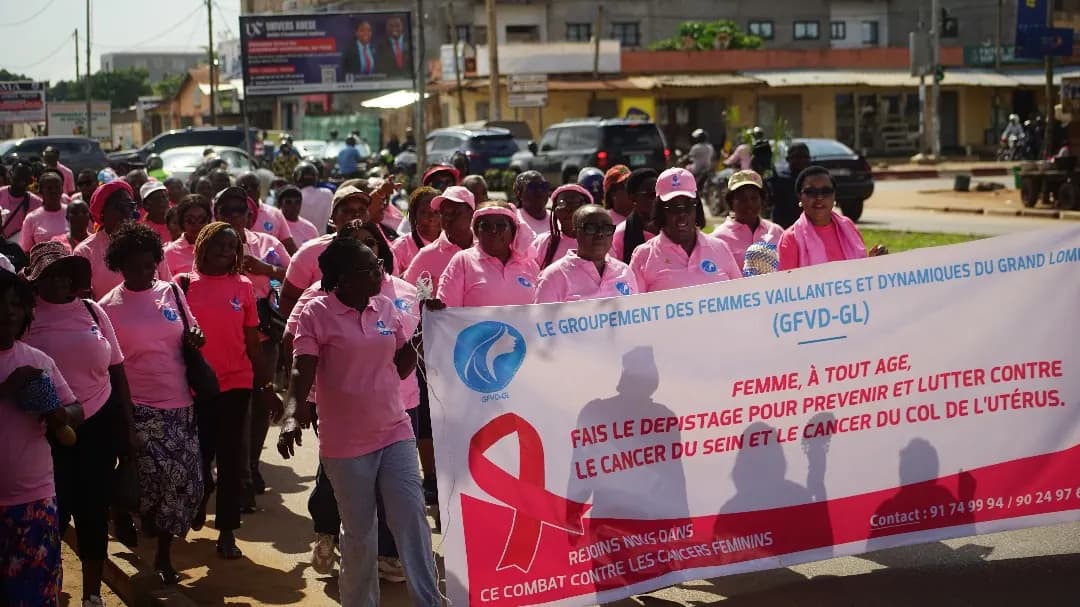
Breast cancer
Signs, screening and myths
What breast cancer is, the warning signs to look out for and how to detect it early.
Learn
Breast cancer
Practical guide
Cervical cancer
Global estimates from the WHO and IARC (GLOBOCAN 2022).
Looking at and feeling your breasts every month helps you notice an unusual change sooner.
Follow the self-exam guideA lump, discharge or a change in the skin? Show it to a health professional, even if it doesn’t hurt.
See the warning signsClinical breast exam, cervical screening: find out about the centres near you.
Learn about screeningThe risk increases with age, but breast cancer can affect women at any age after puberty. That is why it helps to know your breasts from early adulthood and to see a health professional if anything changes.
No. Most breast lumps are not cancer. But only a health professional can tell: any new lump should be examined, even if it is not painful.
Yes, very often, especially when it is found early and treated promptly. The chances of recovery are much better for a small tumour than for a cancer found late.
Largely, yes. It is almost always caused by a persistent infection with certain human papillomaviruses (HPV). HPV vaccination and regular screening make it possible to prevent it or to treat it at an early stage.
No. Breast cancer cannot be passed on by touch, by sharing a meal or through breastfeeding. A person who is ill needs support, not to be kept at a distance.
The information on this page is based on publications by the World Health Organization (WHO) and the International Agency for Research on Cancer (IARC).
For information only
This information does not replace a medical consultation. It cannot be used to make a diagnosis or to choose a treatment. For any question about your health, or if you notice a change, see a doctor, a midwife or a health centre.
Content reviewed on 3 October 2026