+228 70 20 20 06
Togo en RoseGFVD-GL
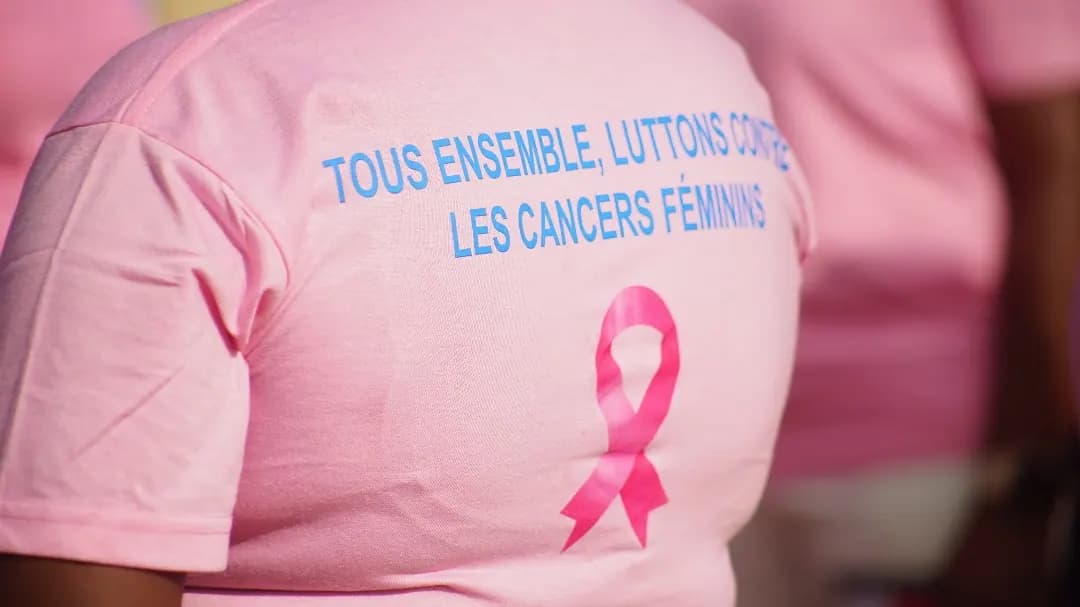
Back of a pink T-shirt with the slogan “Tous ensemble, luttons contre les cancers féminins” (Together, let’s fight women’s cancers) and a pink ribbon

Practical guide

Breast self-exam, step by step

A few minutes a month to get to know your breasts and spot a change sooner. Follow the guide, print the checklist and set a reminder.

A useful habit, but not a substitute for an examination

Self-examination helps you know your breasts and react quickly if something changes. It does not replace a clinical examination by a health professional, nor a mammogram when one is recommended for you. If you notice something, see someone, even if your last check-up was normal.

When should you do it?

  • Once a month

    At the same time each month, so you can compare from one month to the next. There is no need to do it more often.

  • A week after your period

    About 7 days after your period starts, your breasts are less swollen and less tender: this is the best time.

  • No periods?

    After menopause, during pregnancy or if your periods are irregular, choose a fixed date, such as the 1st of each month.

The six-step guide

Go at your own pace. The diagrams are simplified to show the movements and the areas to check.
Step 1 of 60%
Diagram: simplified figure facing a mirror, arms by the sides

Step 1 of 6

Look in a mirror with your arms by your sides

  1. Stand undressed from the waist up in front of a mirror, in a well-lit place.
  2. Keep your arms by your sides, shoulders straight, and look at both breasts.
  3. Then put your hands on your hips and press firmly to tighten your chest muscles: look again.

What to look for

  • a change in the size, shape or outline of a breast
  • skin that dips, puckers or looks like “orange peel”
  • redness or swelling

Tip

It is normal for the two breasts not to be exactly the same. What matters is a change from what is usual for you.

What if I notice a change?

Don’t panic, but don’t wait either.
  1. Stay calm

    The vast majority of changes are not cancer: cysts, changes linked to your cycle, infections…

  2. Write down what you notice

    Where? Since when? Does it change with your period? These details will help the health professional.

  3. Make an appointment soon

    See a doctor, a midwife or a health centre within the following weeks, without waiting for pain.

  4. Get support

    Call our helpline: we will help you find where to get examined and stay by your side.

If a change worries you between two self-exams, do not wait for the following month: see someone.

Call the helpline · +228 70 20 20 06

My printable self-exam checklist

My printable self-exam checklist

Print this checklist and hang it in your bathroom. Tick a box every month.

The checklist prints on its own, without the rest of the page.

My monthly breast self-exam

About one week after your period starts, or on a fixed date each month.

  1. 1. Look in a mirror with your arms by your sides
  2. 2. Raise your arms and look again
  3. 3. Lie down and feel each breast
  4. 4. Repeat standing up, for example in the shower
  5. 5. Don’t forget your armpits and collarbones
  6. 6. Look at your nipples

What to look for

  • a change in the size, shape or outline of a breast
  • a dip or crease that appears when you raise your arms
  • a lump, mass or thickening
  • a new lump or thickening
  • a lump or swollen lymph node
  • a nipple that has pulled in or changed direction

My 12-month record

  • Jan
  • Feb
  • Mar
  • Apr
  • May
  • Jun
  • Jul
  • Aug
  • Sep
  • Oct
  • Nov
  • Dec
Noticed a change? See a health professional. Togo en Rose — togoenrose.org · Helpline +228 70 20 20 06

Set a monthly reminder

Add a recurring appointment to the calendar on your phone or computer. The file is created on your device: no data is sent to us.

Choose a day about one week after your period starts (between the 1st and the 28th).

Or add it to Google Calendar

The reminder repeats every month. You can change or delete it at any time in your calendar.

A doubt after your self-exam?

Our team will listen and refer you to a health professional near you.
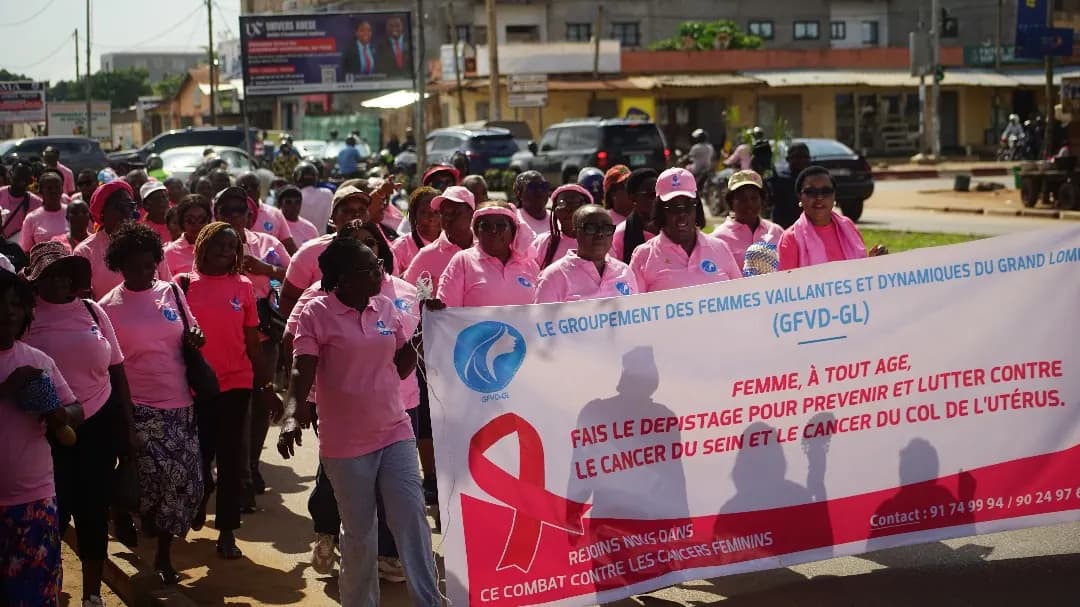
  • GFVD-GL banner carried in the procession: “Women, at any age, get screened to prevent and fight breast cancer and cervical cancer”

    Breast cancer

    Signs, screening and myths

    What breast cancer is, the warning signs to look out for and how to detect it early.
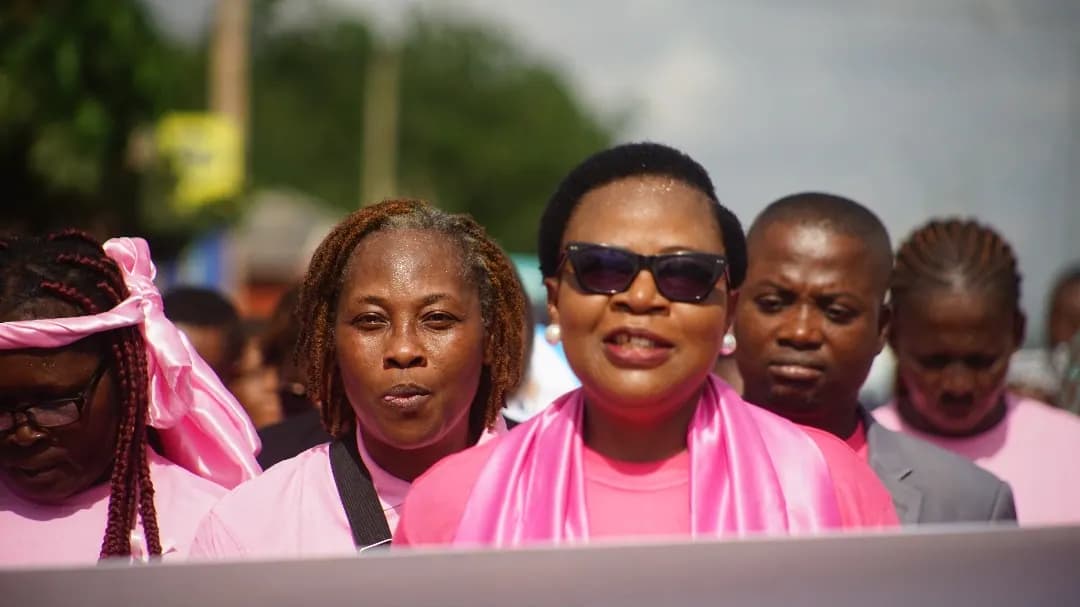
  • Smiling marchers with pink scarves over their shoulders hold the banner

    Prevention

    Risk factors

    What you cannot change, what you can change, and the habits that protect you.

Sources

The information on this page is based on publications by the World Health Organization (WHO) and the International Agency for Research on Cancer (IARC).

  1. World Health Organization — Breast cancer, fact sheet (new tab) — OMS / WHO
  2. World Health Organization — Global Breast Cancer Initiative (GBCI) (new tab) — OMS / WHO
  3. World Health Organization — WHO position paper on mammography screening (2014) (new tab) — OMS / WHO

For information only

This information does not replace a medical consultation. It cannot be used to make a diagnosis or to choose a treatment. For any question about your health, or if you notice a change, see a doctor, a midwife or a health centre.

Content reviewed on 3 October 2026